About

An architect's training. A creative director's instinct.

Dana Sobhy sets the vision — then refuses to hand it off. She's an architect by training, an experiential designer by instinct, and a creative leader by trajectory, trained at Cornell's College of Architecture, Art, and Planning. But what defines how she works isn't the credential — it's that she'll do anything to get an idea built right, from the big creative swing down to the smallest detail, often with her own hands.

She asks a different question than most architects. Not "what should this building look like?" but "how should someone feel when they arrive, what will they remember after they leave, and what story is being told without a single word?"

That instinct for the big idea comes paired with an unwillingness to let go of the details that carry it. Across her work, that's meant hand-painting a conference table to mirror a spinning logo, holding full-scale material panels up to the light before a client ever sees them, designing the drink menu for her own event alongside the run of show, and staying on-site through installation rather than handing a set of drawings to someone else to finish. She'll set the direction and then personally see it through — because to her, the two were never separate jobs.

She's the founder of DONDI, her long-term platform for work that moves fluidly between architecture, hospitality, brand, and culture. She's Creative Director of Maven Art House, a collective supporting emerging artists through exhibitions and cultural programming. And she's currently Senior Design Manager at Zebra, directing retail and hospitality environments for global brands across New York, Dubai, and Hong Kong.

Creative vision means nothing if you're not willing to do the work yourself — down to the last detail.

Where it comes from

Dana is a first-generation American, raised between German and Egyptian cultures. Constantly navigating between two traditions rather than belonging entirely to one taught her, early, that people experience the same place very differently depending on where they come from.

Travel has reinforced the same idea ever since. Boutique hotels, local markets, quiet courtyards, long shared meals — the places she remembers most are rarely defined by their architecture alone. They're shaped by hospitality, atmosphere, and the people who fill them. That's the lens she now brings to every client, every market, every team. Based in New York, she's rarely there for long.

Approach

I approach design as a way of shaping how people feel, connect, and participate.

Designing the experience around the idea.

My background is in architecture, but my work has never been limited to buildings. I have led global brand environments, live events, exhibitions, hospitality concepts, cultural programming, workplaces, pop-ups, and digital experiences. Across each format, I begin with the same questions:

I believe the strongest creative work begins with a clear narrative. Every part of the experience — space, material, light, graphics, sound, content, programming, service, and movement — should reinforce that narrative rather than compete with it.

The goal is not simply to make something visually compelling. It is to build a world that feels coherent, intentional, and emotionally resonant.

Ideas become stronger through collaboration.

My work is shaped by collaboration across disciplines, cultures, and points of view. I have led teams and creative partners across New York, Europe, the Middle East, Mexico, and Asia, working with architects, designers, artists, photographers, performers, producers, strategists, fabricators, contractors, founders, and global brand teams.

I do not see collaboration as the dilution of an idea. When guided by a clear creative vision, it is how an idea becomes more layered, relevant, and unexpected.

As a leader, I create clarity around the central concept while leaving space for others to improve it. I value curiosity, direct communication, thoughtful critique, and the ability to recognize the strongest idea regardless of where it originated.

The big idea lives in the details.

I am comfortable working at scale — leading multidisciplinary teams, managing global clients, and directing numerous projects at once — but I remain intensely attentive to detail.

For me, attention to detail is not separate from creative direction. It is how creative direction becomes real.

A concept can be compelling in a presentation and still lose its power through inconsistent materials, an unresolved transition, poor lighting, an unclear guest journey, or a moment that does not support the larger story. I move continuously between the broad vision and the specific decisions required to preserve it.

The work should feel intentional at every scale.

Design should invite participation.

I am most interested in experiences that people actively enter rather than passively observe.

Whether I am designing a global flagship, an exhibition for emerging artists, a World Cup watch party, a hospitality environment, or a workplace built around community, I think about how design can create a sense of belonging and give people a reason to engage with one another.

The most memorable environments do not merely present a story. They allow the audience to become part of it.

My practice.

My experience spans architecture, luxury and lifestyle brands, hospitality, art, culture, sport, technology, and live events. Rather than treating these as separate categories, I see them as connected tools for creating richer experiences.

Architecture

Space, sequence, material, scale, and human behavior.

Creative Direction

Establishing a concept and aligning people around it.

Brand Strategy

Purpose and consistency.

Cultural Programming

Relevance and life.

Production

Turning the idea into something people can experience.

The common thread is a belief that thoughtful design can shift perspective, strengthen connection, and bring people together around a shared idea.

Outside of Work

Creativity follows her everywhere. Outside of client work, she's usually helping friends bring their own ideas to life — setting up pop-up art shows, designing merch for community events, building a stage setup for a musician's first live show. She loves exploring new cities on foot, stopping into every coffee shop she passes. There's something about watching how people live, gather, and express themselves in different environments that keeps her constantly inspired.

One of the most meaningful parts of her life is volunteering as a wish granter with Make-A-Wish — creating moments that make people feel seen and valued, the same energy she brings to a floor plan or a finish schedule. To her, design is just another way of connecting with people.
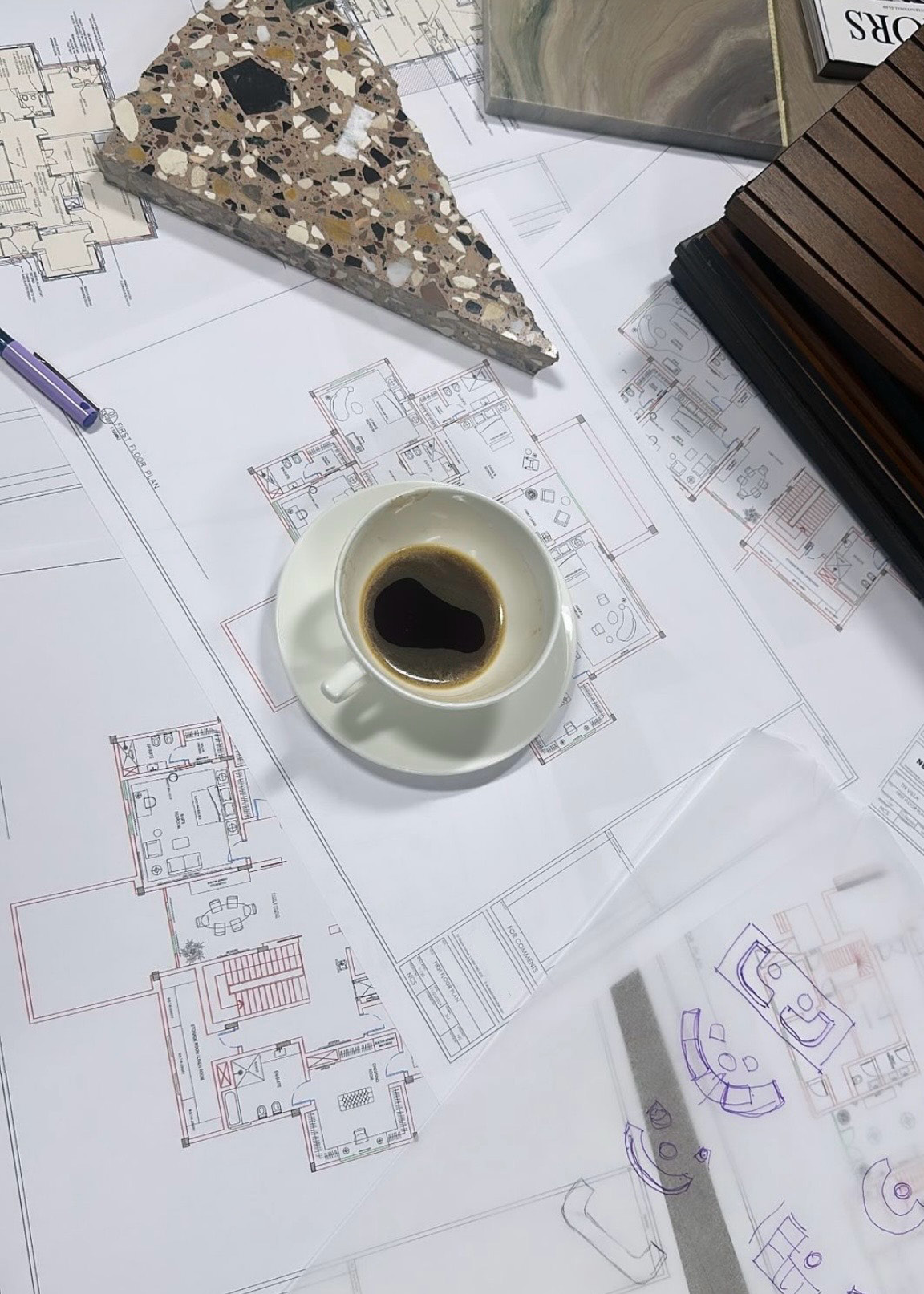
Coffee and floor plans
Get in Touch

Open to creative leadership roles, collaborations, and DONDI inquiries.